
The Future isn’t Inevitable, it’s Intentional

Prada Fall 2026 showcasing intentional abrasions.
Photo: Victor Virgile/Gamma-Rapho via Fashionista
Last year, I wrote about the tiny cracks appearing in the “tech solves everything” façade. I argued that where there are cracks, there are windows of opportunity.
Well, a year has passed. Those cracks didn't get patched over. Instead, the wall broke wide open.
We have officially entered the era of AI fatigue. The collective cultural eye-roll at "AI-powered" toothbrushes, unprompted search summaries, and algorithmic slop has shifted from mild internet cynicism to active consumer resistance. We are tired, our feeds are homogenized, and the promise of frictionless efficiency has delivered something much worse: an exhausting, predictable sameness.
The propaganda isn't working anymore. The future isn't a conveyor belt we are forced to ride; it’s something we are actively choosing to redirect.
The reversals kept coming
Last year it was Klarna rehiring humans after its AI customer service experiment, and Duolingo getting dragged by its own users for going "AI-first." Those weren't one-offs. They were the start of a pattern that's now impossible to ignore.
This year, ChatGPT's share of the AI assistant market slipped below half for the first time. Uber burned through its entire annual AI budget in four months and its own COO admitted the spend is getting harder to justify. JPMorgan and Goldman Sachs both pulled Claude access from staff in Hong Kong. McDonald's Netherlands pulled an AI-generated Christmas ad after a backlash that called it "AI slop" and accused the brand of ruining Christmas spirit. Gucci ran into the same wall with an AI ad campaign, with critics pointing out the obvious tension between "Italian craftsmanship" as a brand promise and synthetic imagery as the delivery method.
Wherever you look, people are drawing a line in the sand. We don't want a world where AI writes the poetry while humans do the laundry. We wanted the exact opposite.
The generation that was supposed to love this most, doesn't
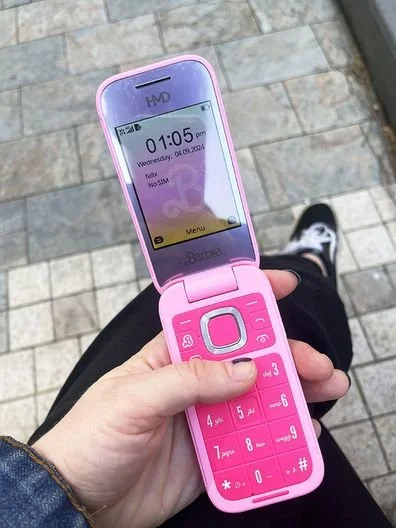
The rise and rise of HMD’s dumb phones
I hate to say I told you so, but the data has caught up with the vibe. Gallup's tracking of Gen Z attitudes shows the share who feel excited about AI has dropped from 36% to 22% in a year, while the share who feel angry about it has climbed from 22% to 31%. Students have booed speakers at graduation ceremonies for so much as mentioning AI. A Pew survey from earlier this year found only 10% of Americans describe themselves as excited about where AI is heading.
This resistance is coming from an unexpected place: the generation that grew up terminally online, tired of being treated as a dataset to optimise rather than a person to help.
The dumb phone has gone from ironic flex to genuine status symbol. What started as a niche "appstinence" movement on a handful of US campuses has become mainstream enough that flip phones now sell on nostalgia and self-control in the same breath. Countries across the world are moving from guidance to law: from introducing social media bans on the under 16s, to the UK’s Children's Wellbeing and Schools Act which puts mobile phone restrictions on a statutory footing for the first time, with schools required to follow it from this summer.
The crack became a window. The window is now the front door. What are you going to do about it?
Stride Through
"Many of us are rediscovering our hunger for authenticity, in part because of the acceleration of AI. We continue to seek evidence of the human hand: traces of individuality, imperfection, skills and intention."
Johann Rupert, Richemont chairman and founder of the Michelangelo Foundation, on this year's Homo Faber
There are two polar opposite bets on the future of products that are playing out right now, and its worth considering them both.
One is the idea of total reinvention, but still follows the linear expansion of tech über alles: OpenAI and Jony Ive continue working on integrated devices meant to move computing past the smartphone entirely, explicitly framed as a correction to the "unintended consequences" of the very device Ive helped build. This is a bet that the fix for tech fatigue is better tech. But tech that cannot fix —just influence— the context of declining trust and divisive times it exists within.
The other is durability and restraint.
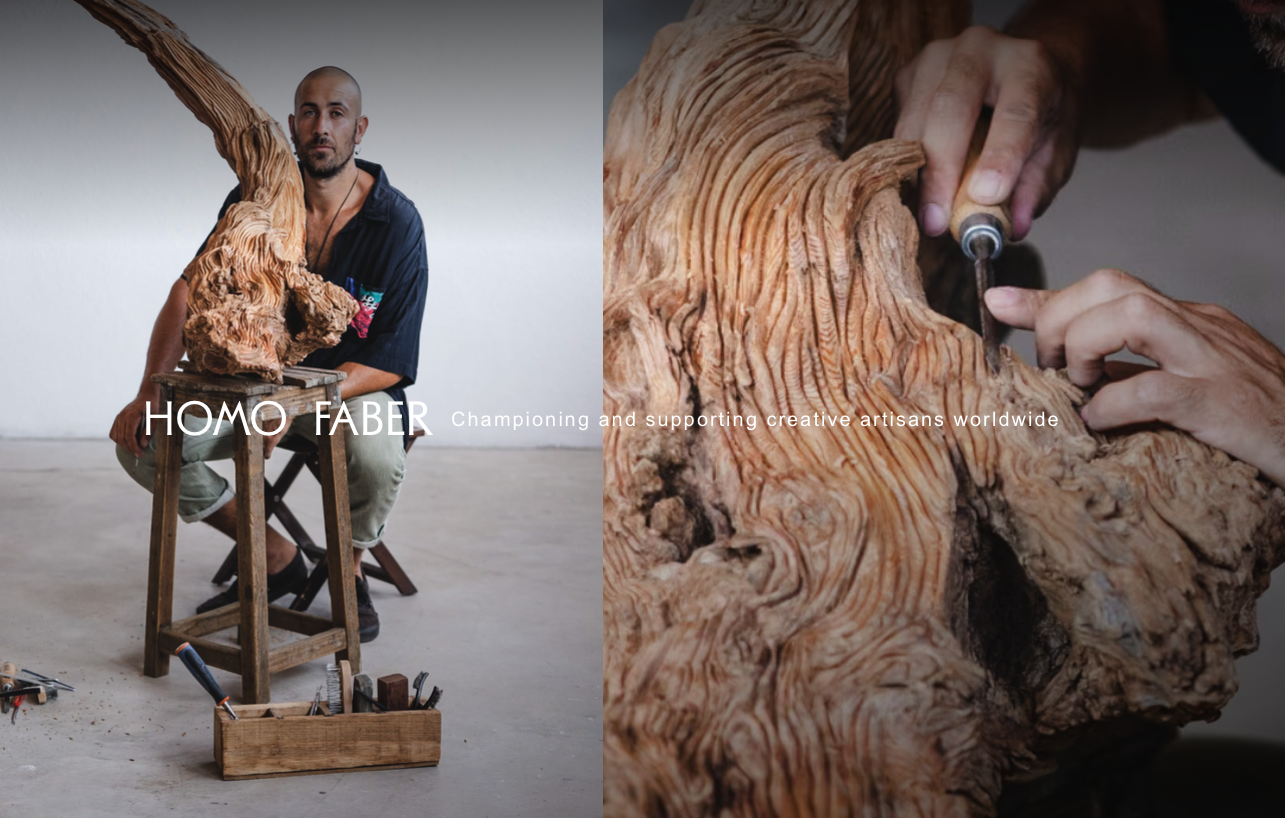
Richemont, the group behind Cartier, Van Cleef & Arpels and half a dozen of the world's most storied Maisons, has spent 2026 doubling down on its sponsorship of Homo Faber and the Michelangelo Foundation, the movement dedicated to preserving hand craftsmanship. It's deliberate: value exists in what human skill did that a programmed machine didn't, and the group is betting its prestige on keeping design and making that way even as it uses technology elsewhere in the business.
This is a bet that the fix for tech fatigue is less tech, applied more deliberately, and kept well away from the part of the product where trust actually lives.
Both are interesting. What connects them is the same thing I said last year: intentionality. Neither bet works if it's made without consideration, or “just because”. Both only work if someone decided, on purpose, that this was the future worth building towards.
Take This To Your Next Meeting
Redefine what "good" looks like
What's earning trust now is rarely the most advanced product. It's the one that respects people's time, attention and agency. Frictionless is done. Considered friction, the kind that makes someone pause and choose, is what's working.
Design for digital discernment
Your audience is asking sharper questions than they were last year: why am I seeing this, why does it exist, what's the cost to my focus and my privacy. Pre-design your answer.
Go a step further and ask it before they do: is a product or a piece of tech even the right answer to the problem in front of you? Not everything needs an app. Sometimes the more intentional move is a conversation with a neighbour, an event that gets people in a room, a service designed around a person rather than a login screen, or a letter to your local politician. Build content and experiences that read as genuine help, not as a use of budget that needed spending.
Lead with empathy, not efficiency
Fast still won't beat thoughtful. Take the last twelve months of AI reversals as your case study, not a cautionary footnote. Invest in your people and use AI to extend their reach, not replace the human-to-human moments that actually build a brand.
Let's get intentional
The conversation has properly shifted, this year more than last, from "how do we get people to engage more" to "how do we build things that genuinely serve them." What if your strategy wasn't designed to keep people scrolling, but to help them find what they need and get back to their lives? What if your brand became known for freeing people's attention rather than capturing it?
Don't just adapt to technological change. Help design it.
The future isn't inevitable. It's intentional.
If this resonates with you, let’s talk.