
Good Futures No.01 — The Future of Gathering
The Background
A wave of research on anxious generations, economic pessimism and a widespread culture of futurelessness pointed to a clear gap: people needed a regular, accessible space to practise thinking differently about the future. Not a lecture, not a panel, not another doom-laden news cycle but a facilitated, playful, human experience designed to build the muscle of optimistic futures thinking.
Good Futures was designed to fill that gap. A monthly event that pops up across different communities and locations, using signal-based discussion and creative facilitation to help people reframe bad news and weird signals into possibility.
The Challenge
Most conversations about the future are passive and people receive information rather than actively engaging with it. The challenge was to design a format that felt genuinely accessible to people who weren't futures thinkers, that encouraged participation without pressure, and that left people with something concrete to work on, not just an interesting yet abstract conversation.
The format also needed to work across different group sizes, locations and themes without requiring significant resources to produce each edition.
The Approach
Format Design
Developed a facilitated small group discussion format built around three core components:
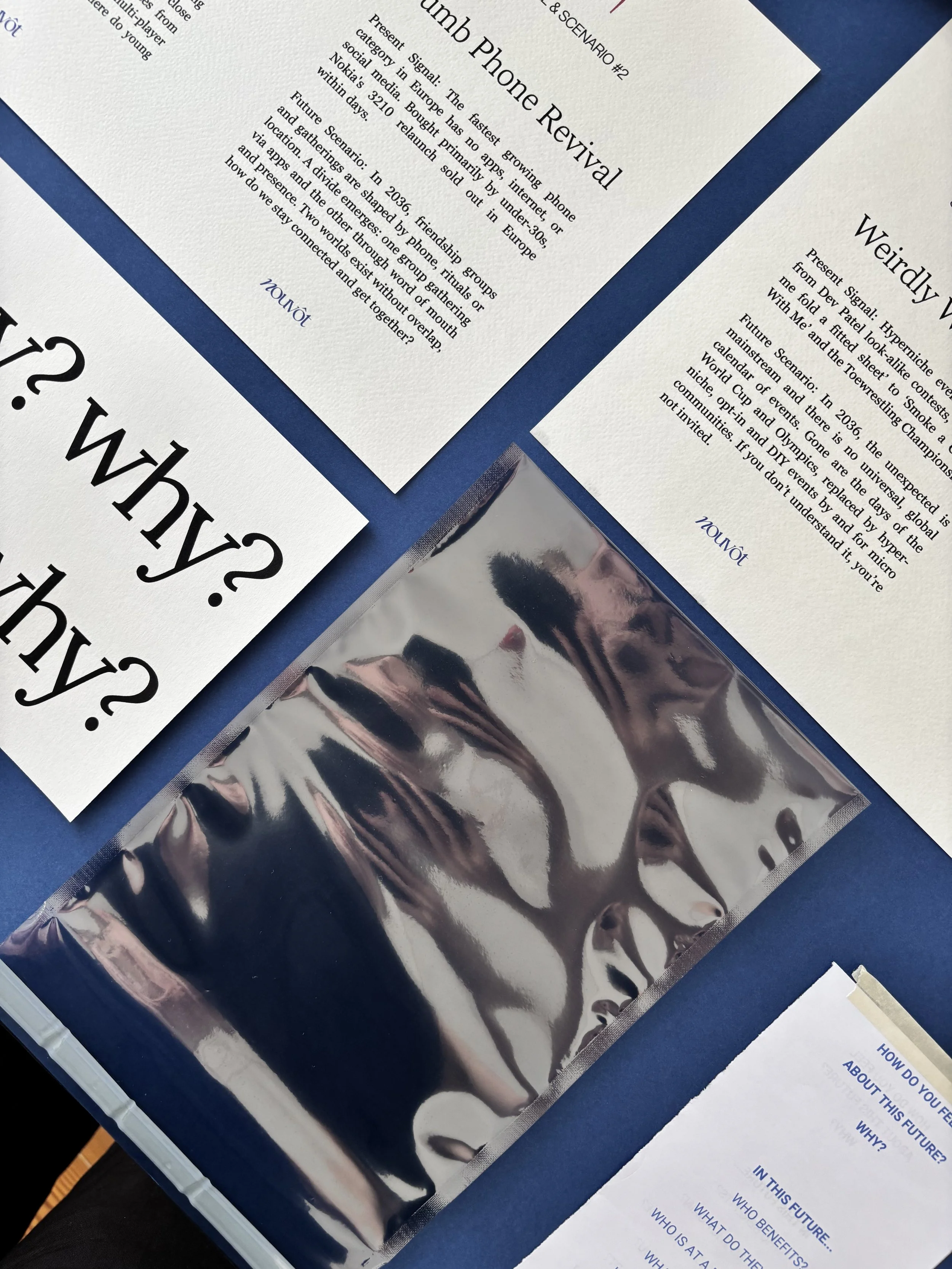
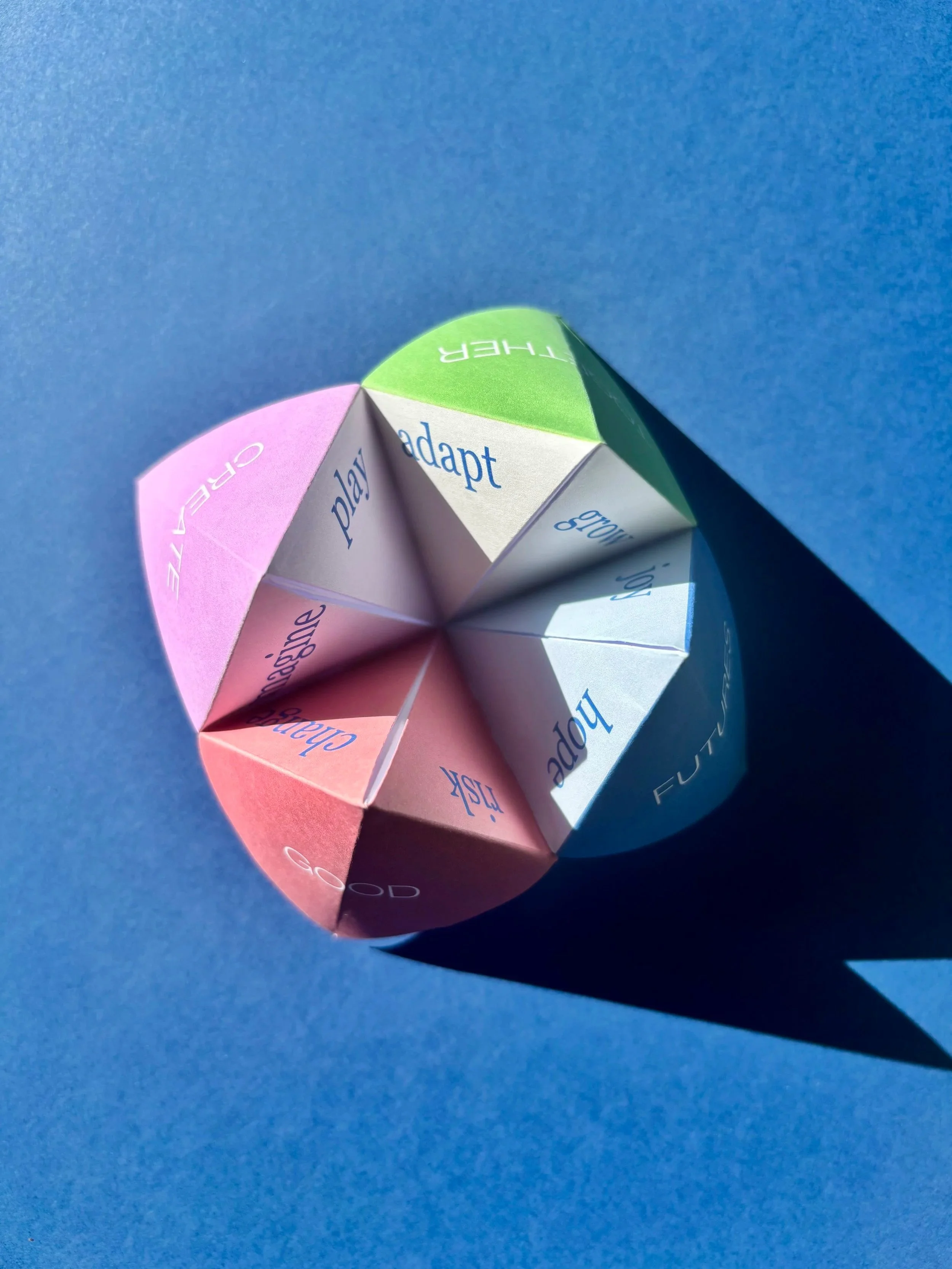
A prompt kit for each group containing: three signal cards presenting real emerging signals from the world, five prompt cards designed to activate discussion and optimistic rather than defensive thinking, a card to encourage curiosity and deeper questioning, and a fortune teller game to introduce playfulness and lower the barrier to participation.
Session Structure
The session opened with a short contextualisation of the theme — the future of gathering — and an invitation to explore rather than debate. Small groups worked through the signals together, guided by the prompt cards at their own pace. The session closed with a personal reflection: participants wrote down which signal impacted them most and one thing they could do tomorrow to help create or protect that future.
Location & Format
Held outdoors at Jardim da Estrela, Lisbon. This was a deliberate choice to hold the conversation about the future of gathering in a public, shared, ungoverned space. BYOB, bring a blanket, an intimate and curated group of participants for the first edition.
Results
A founding insight for the series: no matter how complex or difficult things get, people will always find a way to come together. A simple but powerful reminder that connection is resilient and worth designing for.
An unexpected conversation thread: participants expressed a genuine desire for more intergenerational socialising and reflected on how much we self-segregate by age and what we lose because of it.
Personal impact: one participant shared that the session helped them get out of their comfort zone and think very differently about the future in a way they wouldn't normally — which is exactly what Good Futures was designed to do.
Format proof: the signal and prompt card system worked as a conversation engine, generating genuine discussion without requiring heavy facilitation. The format is scalable and repeatable across different themes and locations.
Key Learnings
Start with optimism, not analysis. Opening with "what could be good about this future?" unlocks generative thinking before critical thinking. Participants who started with the positive prompt engaged more openly and went to more interesting places in the conversation.
Less structure, more space. A prompt list is overwhelming. Single prompt cards give people focus and agency simultaneously. For future editions, one prompt per card, laid out for groups to choose from.
Tell people what's coming. Participants benefited from knowing the closing reflection question upfront — it helped them listen differently throughout the conversation and arrive at the end with something more considered.
The potential is bigger than the format. Edition one revealed how much appetite there is for this kind of thinking and how much more education and skill-building is possible.
Good Futures has the potential to become more than just an event.
Stay tuned.