
Trust and Trade-offs: Facilitating Systemic Innovation with WHO
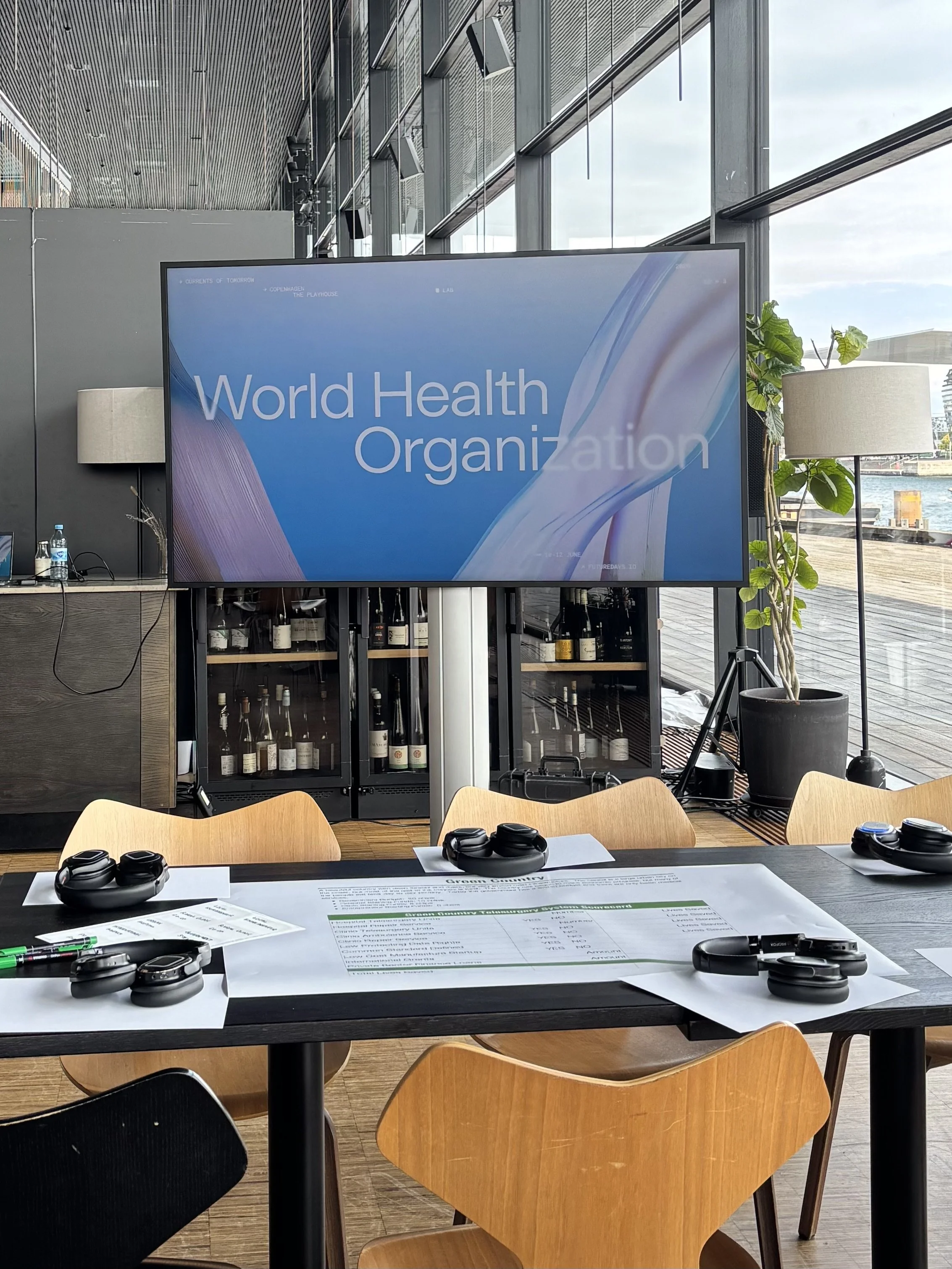
The WHO systems innovation workshop
The Background
Working as one of five facilitators running a one-hour roleplay workshop for 60 participants, split across five tables as part of Future Days Copenhagen. The session was designed to land a newly released framework for systemic innovation in health inequality, built around a telesurgery scenario set across three countries with differing levels of wealth, opportunity and challenge.
The Challenge
The brief was ambitious by design: landing a complex new framework experientially, in an hour, with 60 people, through a scenario covering seven distinct roles shaping a health system: government, international agency, private finance, tech supplier, urban hospital, rural hospital and local entrepreneur. With moving parts evolving right up until the session started, part of the job was holding the structure steady for participants while still adapting in real time ourselves.
The Approach
Each table took on the roles within one country and had to work out their strategy: which goals to pursue, how to raise the money and equipment needed to save lives, and how (or whether) to collaborate with the other countries at the table next to them. The core idea the framework was devloped to land the message: this isn't a zero-sum game, and systemic innovation depends on collaboration across roles that don't naturally trust each other.
As a facilitator, the role shifted constantly depending on what the table needed. From explaining game mechanics, suggesting moves a role could make, to deliberately adding pressure to lift the energy, or stepping right back once a table was fully in motion.
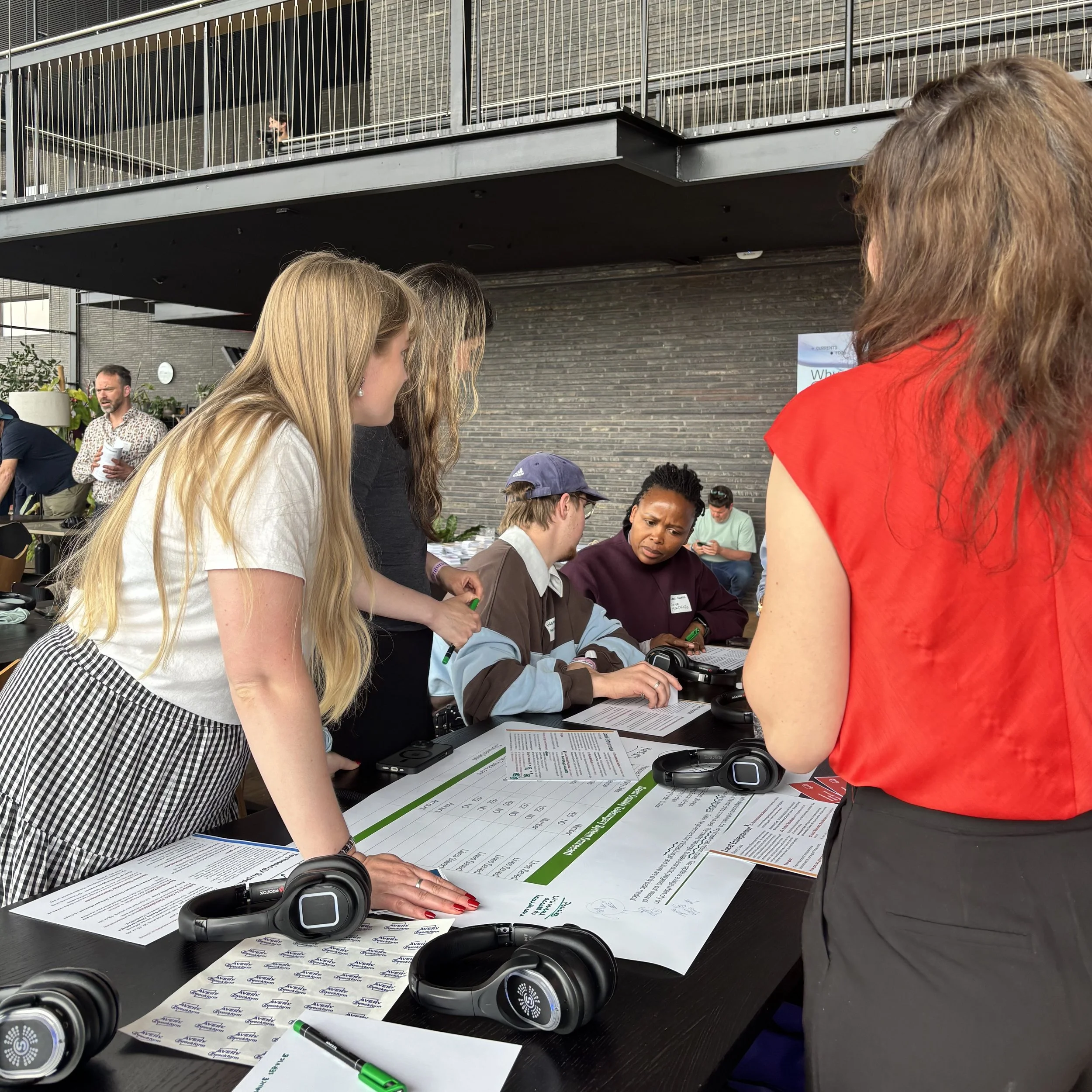
Participants engaged during the roleplaying workshop
The Results
The energy in the room was the strongest signal that the format worked. International agency roles broke out of their tables entirely and formed their own group, issuing new standards to governments mid-game. Tables spent the hour haggling over costs, and every country found a way to make deals and save lives, with several negotiating right down to the final minute.
Engagement was incredibly high across all tables, including ones we hadn't expected to take it this seriously.
The reflections that participants shared afterwards went well beyond the brief. One table reported that with low resources and no existing relationships, they'd assumed the worst of each other by default - underscoring the essential need for building relationships to create collaborative mindsets. Another said they'd gone in certain they were going to win, later realising that wasn’t the point at all. One group noticed the system had no patient role — so they created it themselves. And in one of the strongest moments of the session, a participant playing private finance chose to give away all their money on the condition that the recipient learned something from it, turning every transaction at their table into a question: what did you learn?
Key Learnings
A complex framework lands best when people fully experience it rather than have it explained to them.
One hour of roleplay surfaced exactly the dynamics (mistrust, negotiation, emergent collaboration) the framework was trying to teach, without anyone needing to be told what the takeaway was. Facilitating seven very different energies at once means reading each one separately and adjusting, at times being a rules referee, acting as the banker or a strategist, or simply stepping back entirely.
Interested in running an immersive session with your team? Get in touch at nouvot.co